Paul Bauer · 1 October 2026
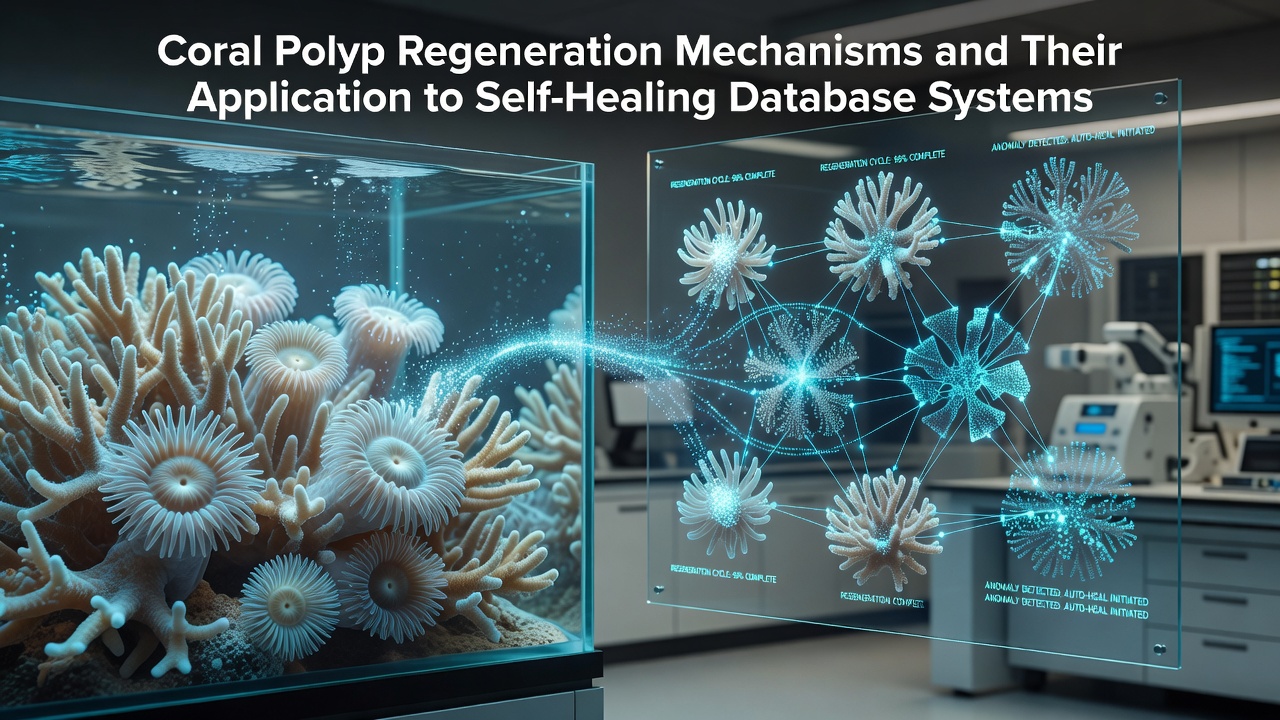
Coral Polyp Regeneration Mechanisms and Their Application to Self-Healing Database Systems
Coral polyps demonstrate regeneration through asexual budding, fragmentation, and tissue repair processes that allow colonies to recover from physical damage while maintaining structural integrity over extended periods. Researchers have documented these mechanisms across various reef species where individual polyps divide or regrow lost sections using cellular migration and extracellular matrix reconstruction. Data from marine biology studies indicate that regeneration rates vary by species and environmental conditions yet follow consistent patterns of polyp expansion and integration with existing colony frameworks.
Biological Mechanisms in Detail
Polyp regeneration begins with the activation of stem-like cells located near the basal disc and tentacles, and these cells migrate to injury sites where they differentiate into specialized tissues including gastrodermis and calicoblastic layers. Studies show that calcium carbonate deposition resumes within hours of damage detection while symbiotic algae repopulate the repaired areas to restore photosynthetic capacity. Fragmentation occurs naturally when branches break during storms yet each detached piece can establish a new colony through rapid attachment and skeletal growth. Observers note that fission events split a single polyp into multiple functional units that continue independent yet coordinated development within the larger structure.
Evidence from long-term monitoring programs reveals that successful regeneration depends on maintaining connectivity between polyps through shared gastrovascular canals, and this network distributes nutrients and signaling molecules across the colony. When one section experiences stress, adjacent polyps increase metabolic activity to support repair. In October 2026 researchers presented updated models at an international marine science meeting showing how these interconnected systems maintain colony viability despite repeated disturbance events over decades.
Mapping Regeneration to Database Architectures
Database engineers have examined polyp regeneration as a template for designing self-healing systems where data nodes replicate functions similar to polyp division and tissue repair. In this model each database shard operates like an individual polyp, and when corruption or hardware failure occurs, neighboring nodes initiate data reconstruction using redundant copies stored across the network. The process mirrors how polyps redistribute cellular resources through shared canals while preserving overall colony architecture.
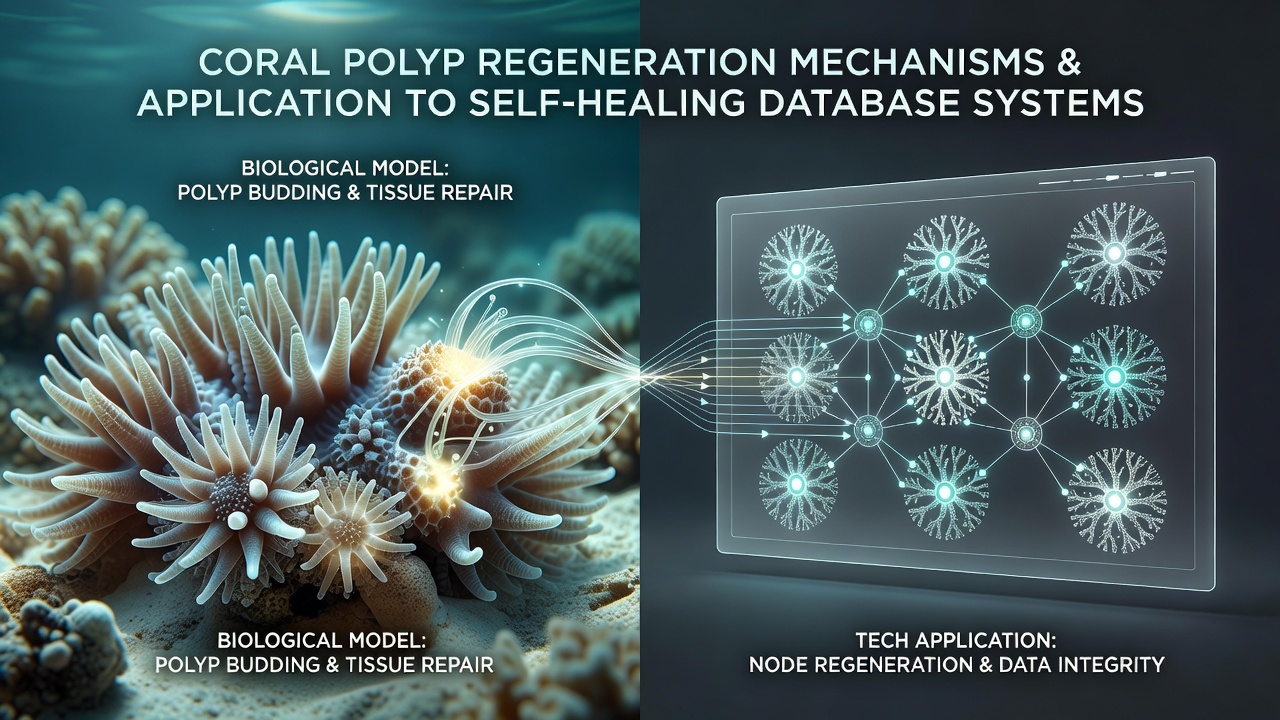
Implementation involves distributed ledger-style replication combined with automated consistency checks that trigger repair sequences without human intervention. Research indicates that systems modeled after polyp budding can spawn temporary data replicas during high-load periods and then merge changes back into primary structures once stability returns. Australian Institute of Marine Science monitoring data has informed algorithms that prioritize regeneration of critical data pathways first, much as corals restore feeding structures before skeletal extensions.
Implementation Examples and Research Findings
Organizations developing autonomic computing platforms have tested polyp-inspired protocols in cloud environments where node failure rates reach several percent annually. These trials demonstrate that regeneration-style recovery reduces downtime compared with traditional failover methods because repair occurs locally and incrementally rather than through full system restarts. One study revealed that databases incorporating fragmentation logic achieved recovery times measured in seconds for partial data loss scenarios while preserving transaction integrity across distributed clusters.
Additional work at European research institutions has focused on signaling pathways analogous to coral nerve nets, and these pathways enable rapid detection of anomalies followed by targeted data healing. Figures from industry reports show adoption of such techniques in financial and logistics databases where continuous availability remains essential. The mechanisms also extend to edge computing deployments where intermittent connectivity mimics the variable conditions found on reefs.
Conclusion
Coral polyp regeneration provides documented biological processes that researchers continue to translate into self-healing database designs through node replication, distributed repair, and network connectivity models. Ongoing studies track both reef recovery patterns and corresponding improvements in database resilience metrics. As implementations mature, the core principles of polyp division and resource sharing remain central to advancing automated system maintenance across varied computing environments.