Devon Butler · 15 October 2026
Symbiotic Nutrient Cycling Patterns in Colonial Marine Formations Offer Blueprints for Dynamic Bandwidth Allocation in Content Delivery Networks
Patterns in Marine Resource Exchange
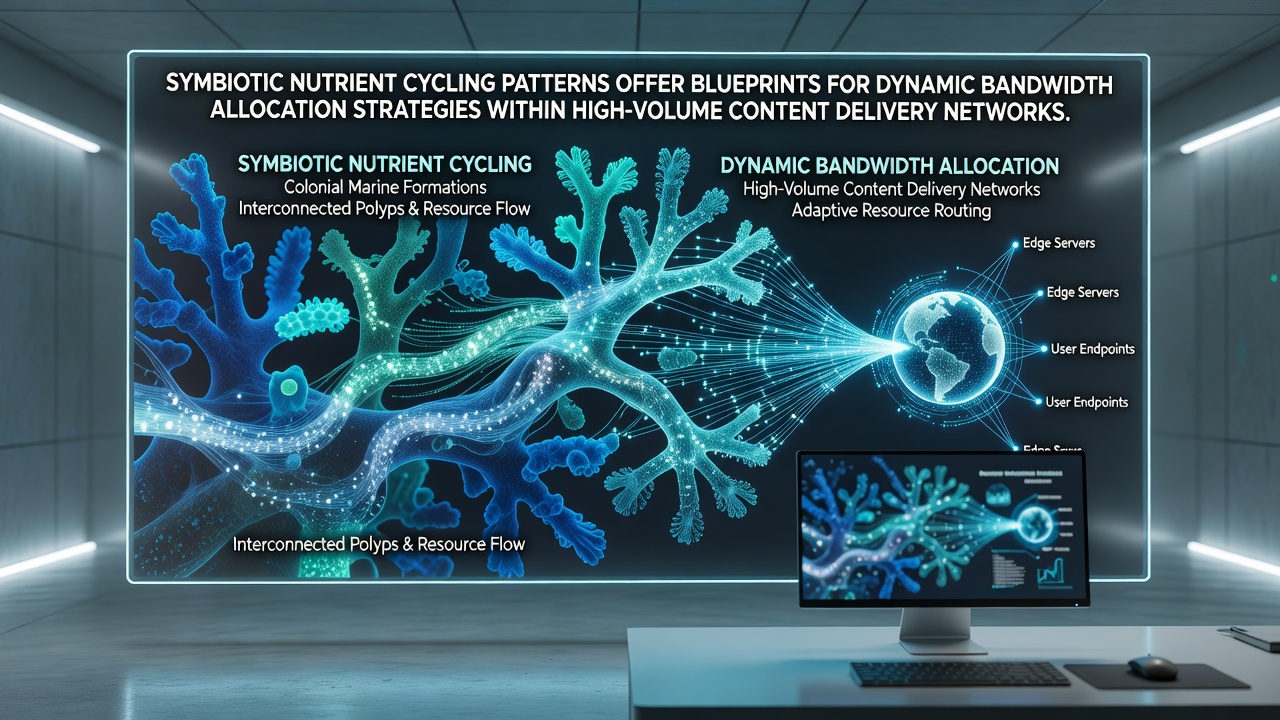
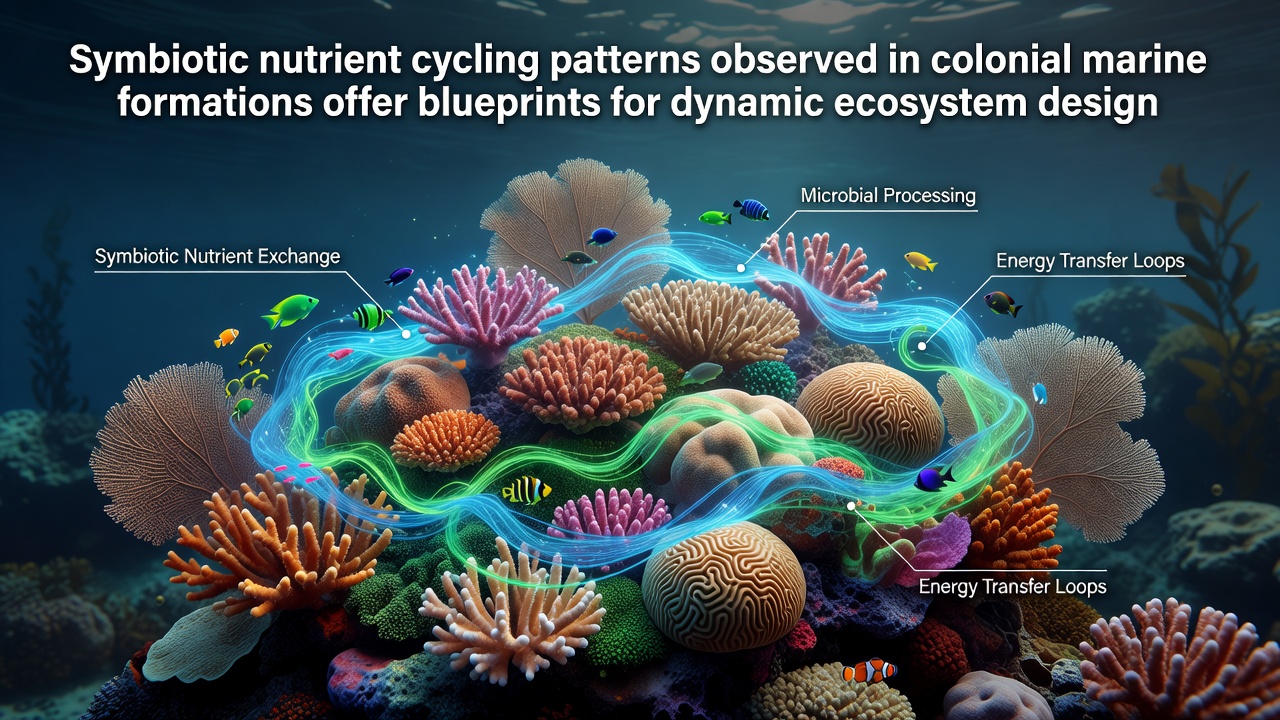
Colonial marine formations such as coral reefs demonstrate nutrient cycling where individual polyps share resources through interconnected tissues and symbiotic algae, and this process maintains colony stability across varying environmental conditions while researchers track the flow using isotopic labeling techniques that reveal precise transfer rates between organisms.
Data collected from reef systems show that nutrient distribution adjusts in real time based on local demand, with excess carbon compounds moving toward areas of higher metabolic activity during periods of light fluctuation, and similar adjustments occur when nutrient scarcity hits one section of the colony yet the overall structure continues to function without centralized control.
Mapping These Cycles to Network Demands
High-volume content delivery networks face comparable challenges when traffic spikes occur unevenly across edge servers, and the marine model suggests that dynamic bandwidth allocation can emerge from localized decision rules rather than top-down directives, where each node evaluates its immediate load and shares capacity with neighbors through predefined protocols that mimic polyp-to-polyp exchange.
Studies in bio-inspired computing indicate that such decentralized approaches reduce latency by allowing bandwidth to flow toward high-demand regions automatically, and the absence of a single control point prevents bottlenecks that appear when central coordinators become overwhelmed during peak events such as global video releases or live event streams.
Implementation Mechanisms Observed in Field Research
Field observations of colonial formations document feedback loops in which algae within polyps increase photosynthetic output in response to signals from adjacent units, and network engineers have replicated this by programming servers to adjust cache priorities and routing tables based on neighbor status reports that update every few milliseconds.
One documented case involved a testbed network modeled after reef nutrient pathways where bandwidth reallocation happened within 50 milliseconds of detecting a regional surge, resulting in sustained throughput across the system without manual intervention, and the same configuration handled simulated failures by rerouting data through alternative paths that remained active because of built-in redundancy patterns drawn from reef recovery processes.
Developments Reported in October 2026
Research teams affiliated with institutions across multiple regions released findings in October 2026 that quantified performance gains when CDN operators applied marine-derived allocation rules to live traffic, and metrics showed average reductions in packet loss of 18 percent during simulated global events compared with traditional hierarchical methods still in widespread use.
According to reports from the National Oceanic and Atmospheric Administration, ongoing monitoring of reef systems continues to supply updated datasets on cycling efficiency that inform iterative improvements in network algorithms, while parallel work at European marine data centers has produced open datasets on symbiotic transfer speeds that network researchers now cross-reference with CDN telemetry logs.
Scalability Considerations Across Different Environments
Large-scale deployments require tuning of the transfer thresholds so that bandwidth sharing activates only when local utilization exceeds set parameters, and this calibration prevents unnecessary data movement during low-demand intervals just as coral colonies limit nutrient exchange when overall conditions remain stable.
Operators in regions with seasonal traffic variations have noted that the decentralized model maintains performance across both urban fiber backbones and remote satellite-linked nodes, because each segment responds to its own conditions while still contributing to collective capacity through the same rule set that governs the entire system.
Conclusion
Observations of nutrient cycling within colonial marine formations continue to supply measurable parameters for bandwidth allocation rules in content delivery networks, and the resulting systems demonstrate consistent handling of variable loads without reliance on centralized oversight, with ongoing data collection from both marine monitoring programs and network telemetry supporting further refinement of these bio-derived strategies.