Devon Butler · 17 September 2026
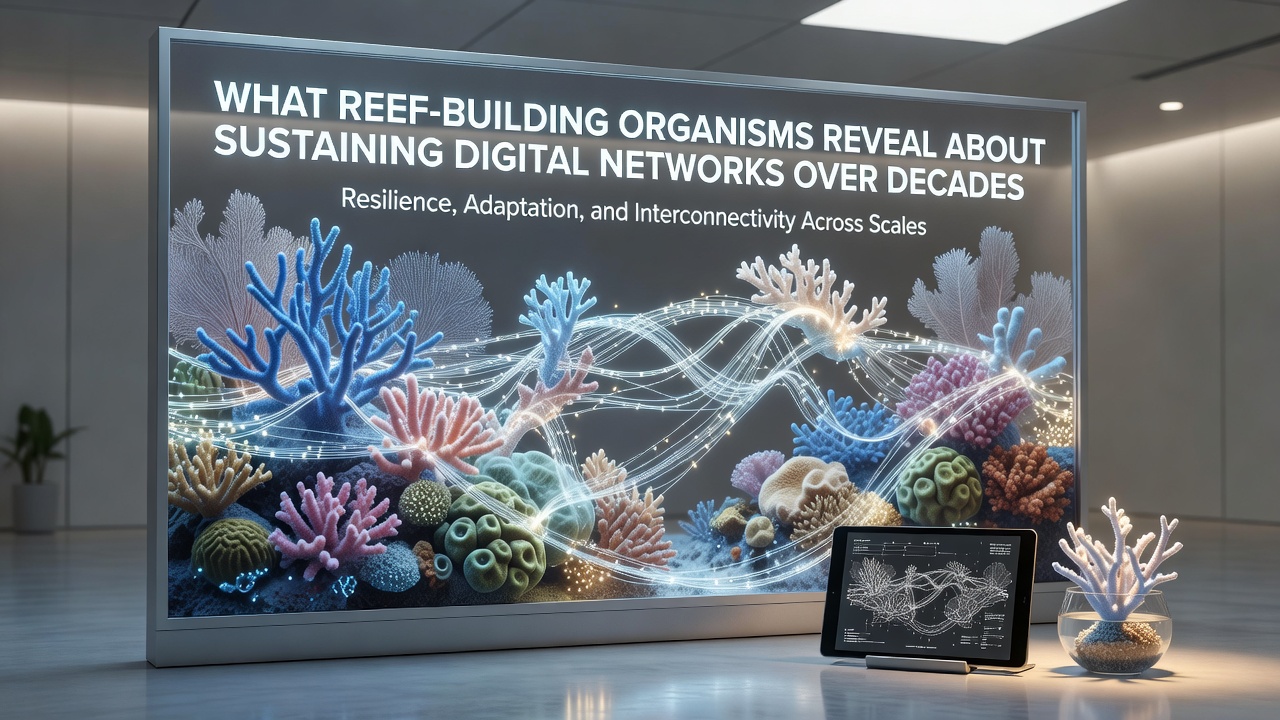
What Reef-Building Organisms Reveal About Sustaining Digital Networks Over Decades
Reef-building organisms such as scleractinian corals construct massive calcium carbonate frameworks through continuous polyp activity and symbiotic relationships with zooxanthellae algae, processes that researchers have documented across tropical marine environments for centuries. These structures demonstrate layered accretion where each generation adds to previous foundations, creating habitats that persist through environmental fluctuations while supporting diverse associated species. Data from long-term monitoring programs indicate that successful reefs maintain structural integrity across multiple decades even as individual polyps turn over rapidly.
Biological Mechanisms of Sustained Growth
Coral colonies achieve longevity through modular reproduction and calcification rates that vary with water chemistry, temperature gradients, and nutrient availability, according to studies compiled by marine research institutions. Genetic diversity within polyp populations allows adaptation to localized stressors, while physical connectivity between colonies facilitates larval dispersal that replenishes damaged areas. Measurements collected over multi-year transects show that reefs with higher species richness exhibit slower rates of framework erosion during bleaching events compared with monoculture stands.
Calcification depends on aragonite saturation states in seawater, a factor tracked through global oceanographic arrays that record seasonal and decadal shifts. When conditions remain within tolerance thresholds, annual extension rates average several millimeters per colony, compounding into meter-scale relief over decades. Observers note that disturbance regimes, including cyclones and predation, prune weaker branches yet stimulate regeneration from surviving tissue, a dynamic that maintains overall reef topography.
Mapping Ecosystem Principles to Network Infrastructure
Engineers examining digital networks identify analogous requirements for redundancy, diversity of routing paths, and modular hardware upgrades that parallel the incremental layering seen in reef frameworks. Protocols designed for long operational lifespans incorporate checksum verification and distributed consensus mechanisms that detect and isolate faults before they propagate, much as coral immune responses wall off infected sections. Deployment records from major backbone operators reveal that systems updated through phased rollouts rather than wholesale replacement maintain higher uptime percentages across ten- to twenty-year horizons.
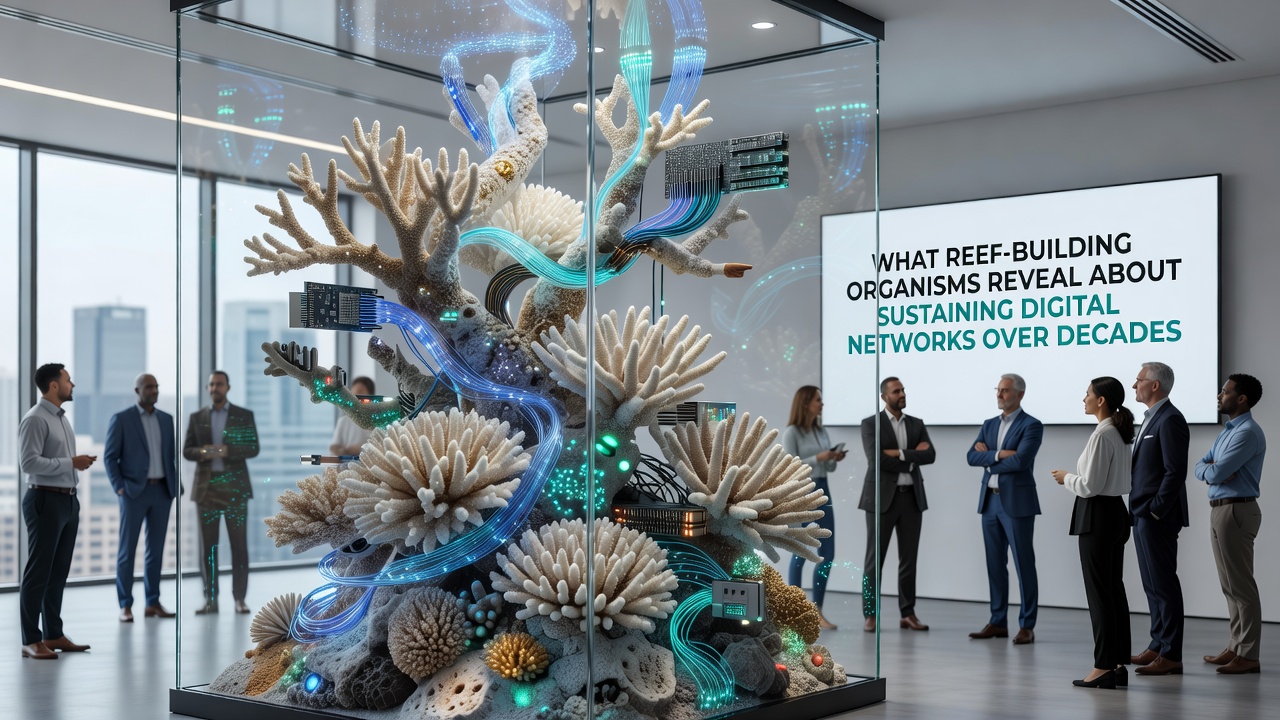
Bandwidth allocation algorithms that prioritize traffic diversity mirror the mixed-species composition of healthy reefs, reducing the risk of cascading congestion when single node clusters experience overload. Metrics gathered by international telecommunications unions indicate that networks employing multiple fiber routes and satellite backups recover from cable cuts within hours instead of days. In September 2026, updated projections from the International Telecommunication Union will incorporate revised latency models that factor in both hardware aging curves and software patch frequencies, providing operators with quantitative benchmarks for multi-decade planning.
Observed Patterns in Long-Term Deployments
Case examinations of undersea cable systems installed in the 1990s show that segments protected by redundant power feeds and periodic optical amplification refreshes continue to carry traffic volumes several orders of magnitude above original design capacity. Maintenance logs demonstrate that proactive replacement of repeater units at predicted end-of-life intervals prevents the type of cumulative signal degradation observed in unmaintained segments. Researchers tracking these installations report that geographic diversity of landing stations correlates with fewer total outages during regional power disruptions.
Software-defined networking overlays allow logical topologies to evolve independently of physical cabling, enabling incremental capacity additions without disturbing established data flows. Performance databases maintained by academic consortia document that platforms refreshed through rolling code deployments sustain packet-loss rates below 0.01 percent over fifteen-year observation windows, whereas frozen configurations exhibit gradual drift. These patterns align with reef observations where continuous, low-level calcification outpaces episodic large-scale mortality events.
Conclusion
Reef-building processes supply measurable indicators for digital network architects seeking operational continuity across generational timescales. Structural redundancy, adaptive response mechanisms, and scheduled component renewal emerge as recurring factors in both biological and engineered systems that achieve multi-decade persistence. Continued collection of parallel datasets from marine monitoring arrays and telecommunications performance repositories will refine quantitative models that translate calcification rates and routing diversity metrics into shared design guidelines.